Latest Post

Unicode and ASCII are now the two-character encoding systems that are most extensively used worldwide. We can process, share and store text in any language through unicode encoding, as opposed to ASCII, which is used to represent text in computers as symbols, characters, and numbers.

What is ASCII?

American Standard Code for Information Interchange is referred to as ASCII. It represents text with numbers. Characters include digits (1, 2, 3, etc.), letters (a, b, c, etc.), and symbols (!). Each character in a text message is changed into a number using ASCII. This collection of figures is simpler to keep in the computer’s memory. If I explain it in laymen’s words then it is the process of giving a character a numerical value.

Let us take an example, an upper case character ‘A’ is assigned as 65, lower case character ‘a’ is assigned as 97. Here’s an image of the ASCII table explaining all the values assigned to the character.

What is Unicode?

Just like ASCII, Unicode also provides one of the ways to uniquely defined numbers. The Unicode encoding method maintains the Unicode standard, which defines emoji and more than 1 lakh 40 thousand characters through 150 modern and ancient scripts.

There are different ways of encoding that can be done through Unicode like UTF-8, UTF-16, and UTF-32. According to statistics, UTF-8 is the most popular encoding used on the World Wide Web.

Differences between ASCII and Unicode

Here’s a table containing some main differences between both.

Unicode ASCII
Unicode has the ability to encrypt 154 scripts. An Ascii has the ability to convert only 128 characters with the 7-bit range.
 Unicode is a bigger version of Ascii. Ascii is a smaller version of Unicode.
 It represents Universal Character Set. It represents American Standard Code for Information Interchange.
It can use 8-bit, 16-bit, and 32-bit as compared to the encoding style. It can use 7 bits to represent a character.
It needs more space. It needs less space.
 An encoding standard is used for electronic communication. A standard way for encoding and managing the text.

Conclusion

In conclusion, the text encoding standards Unicode and ASCII are of the highest importance in recent communication methods. By now you must have understood that Unicode and Ascii contain their own advantages, it depends on the programmer to use encoding systems as per needs. Feel free to comment below if you are still having any doubts.

The post ASCII vs UNICODE – Difference Between Both appeared first on The Crazy Programmer.


from The Crazy Programmer https://ift.tt/MiXxqOD

Object-oriented programming is a programming model that revolves around an object or entity. Object-oriented programming has been an enormous success for both developers and programmers. Creating a more seamless process and system for their employees and clients has benefited multi-billion dollar corporations. However, a significant amount of time must be devoted to learning programming languages and coding techniques to achieve such a result.

In college or university, a novice programmer typically has a ton of assignments to complete in addition to plenty of homework. Thankfully, there are online services like https://wowassignment.com/do-my-programming-homework/ where you can hire professionals to help you with your programming homework and entrust your projects to qualified, experienced programmers.

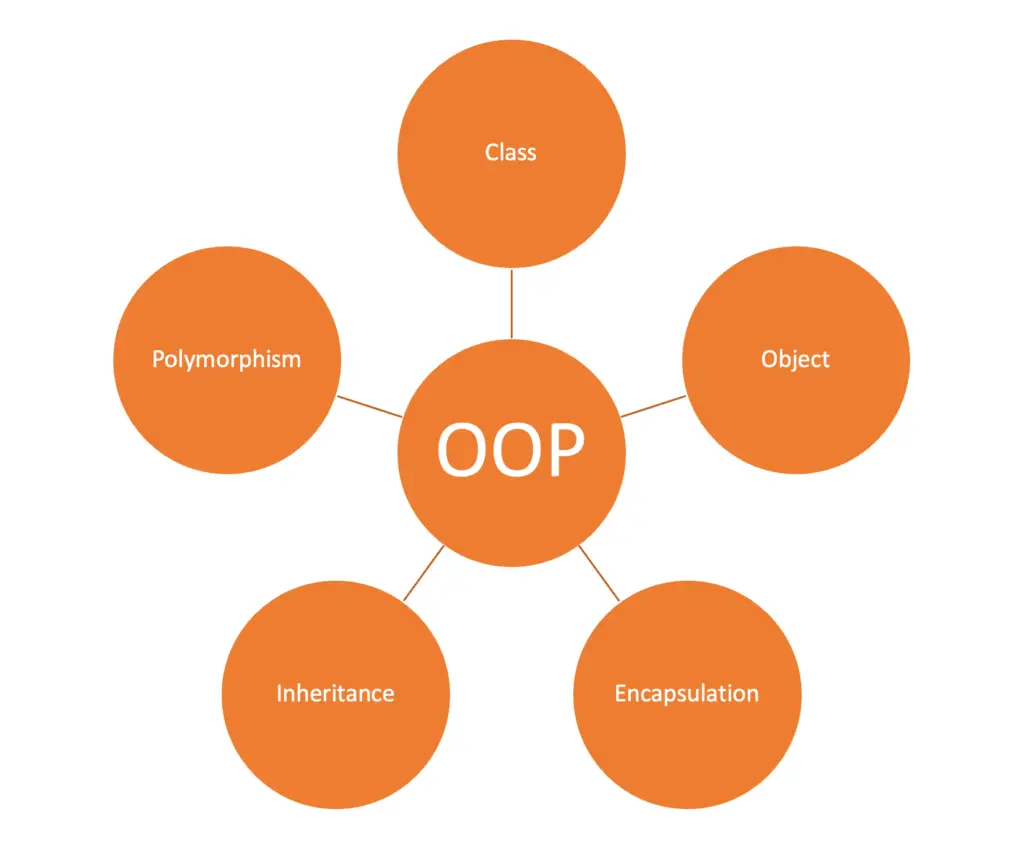
Object-oriented programming is based on five fundamental concepts, namely:

  • Class
  • Object
  • Encapsulation
  • Inheritance
  • Polymorphism

We will tell you about each of these concepts separately.

Object Oriented Programming

1. Concept of Class

The first fundamental concept of object-oriented software is Class. A class is an abstract structure that describes real-world objects from two angles: its properties (characteristics) and methods (the actions it can perform or its behavior).

For example: in object-oriented programming, employees can be represented in the form of a class; in this case, the class Employees represents all the employees who can have as properties a surname, a first name, an address, and a date of birth; the operations that can be performed on employees can be changing their salary, taking leave, retiring, etc.

The Class is ultimately a mold, a template, and all class instances are called objects, which are constructed from the Class by an instantiation process. Therefore, every object is an instance of a class.

The instantiation of a class uses three special methods which are very important to understand.

Constructor

There are three types of constructors:

  • the default constructor called by default when an object is created (offered by default during compilation if there is no declared constructor),
  • the copy constructor (or copy constructor) has a single argument of the same type as the object to be created (generally in the form of a constant reference), and it copies the attributes from the object passed in the argument to the object to be created.
  • the parametric constructor is called if the signature matches that of the constructor.

Accessors (get) and Mutators (set)

These unique methods allow you to call the properties and modify the properties of a class from the outside, like an API. The outside can “call” the Class’s functionalities thanks to them.

Accessors allow you to retrieve the value of the properties of a class instance from the outside without accessing them directly. In doing so, they secure the attribute by restricting its modification. The mutators allow you to modify the value of the properties while checking that the value you want to give to the feature respects the semantic constraints imposed on the Class.

Destructor

This method ends the life of a class instance. It can be called when the object is deleted, explicitly or implicitly.

2. Concept of Object

The second most important concept in object programming is the object. As we said earlier, an object is an instance of a class. The object is a bit like a house built based on a particular plan. As long as architects refer to this plan, they will always produce identical dwellings.

Technically, an object is characterized by three things:

  • an identity: the identity must unambiguously identify the object (address/reference or name);
  • states: each object has a default value (when indicated at instantiation) for its properties. These values are called the states of the object;
  • methods: each object can execute the actions or behavior defined in the Class. These actions are translated in OOP concretely in the form of methods. The possible actions on an object are triggered by calls of these methods or messages sent by other objects.

3. Concept of Encapsulation

The third concept of object-oriented programming is encapsulation.

Its methods can only access the properties of objects. Thus, the Class encapsulates the attributes and the methods that allow manipulating the objects independently of their states.

The encapsulation restricts direct access to the states and prevents object modification outside its methods. For example, if you have a Car class and want to set the value of its color property to blue, you need to go through a method such as a “define the color” implemented by the Class developer. This method can restrict the different color values.

Encapsulation is a mechanism that prevents modification or access to objects by any means other than the proposed methods. It guarantees the integrity of the objects.

4. Concept of Inheritance

Inheritance is the fourth key concept in object programming. It is a concept in OOP that refers to the fact that a class can inherit characteristics (attributes and methods) from another class.

Objects of classes can inherit properties from a parent class. For example, we can define an Employee class and a Manager class, a specialized class of Employee, which inherits its properties.

Inheritance has two main advantages in OOP:

  • specialization: a new class reuses the attributes and methods of a class by adding operations specific to the new Class;
  • reuse: you don’t need to recreate the same Class each time for each specialized Class.

5. Concept of Polymorphism

The last essential concept of object-oriented programming is polymorphism. An object-oriented language is polymorphic if it can perceive an object as an instance of different classes depending on the situation. Java, for example, is a polymorphic language.

Conclusion

Developers should have a solid understanding of object-oriented programming, as it is the foundation of many high-level programming languages. You can identify the underlying causes of bottlenecks and eliminate them by writing more creative code by using the fundamental OOP concepts to comprehend how simple programs operate. Developing your skills can be aided by coding suites, learning new languages, and understanding OOP concepts.

The post 5 Fundamental Concepts of Object Oriented Programming appeared first on The Crazy Programmer.


from The Crazy Programmer https://ift.tt/Jq3Fuc2

What is new?

New is a keyword in c++ and it is a type of memory allocator which is responsible for allocating memory in a dynamic way. The heap memory is allocated by this operator and it shares the beginning address of the memory assigned to a certain variable.

The working of the new keyword is similar to malloc and both of the keywords can be used with C++.

Although we prefer using new keyword because it possess several advantages over malloc.

Here’s a way to represent new keyword in C++:

data_type variable_name_decided = new data_type ( arguments_passed ) ;

In the above syntax “data_type” refers to the datatype for which you want to create memory space in a dynamic way, “variable_name_decided” is used to represent the variable of a particular datatype, “new” keyword is used to allocate memory dynamically, “arguments_passed” can be arguments passed in the constructor for initializing the constructed object.

We are aware that the heap’s capacity is constrained and that the new operator allocates memory to it. As a result, the new operator will fail if the heap runs out of memory and it tries to allocate memory. The program terminates unexpectedly if your code is unable to handle an exception that the new operator throws if it is unable to allocate the memory.

Code:

#include<iostream>

using namespace std;

int main() {
    int *myptr ;
    myptr = new int ;
    
    cout << "Please enter your age : " << " \n ";
    cin >>*myptr;
    
    cout << "Your age is: " << *myptr << " \n ";
    
    return 0;
}

Output:

Please enter your age :  
 55
Your age is: 55

What is malloc?

malloc is a method or function used for allocating the desired quantity of memory in heap. The malloc method is always responsible for returning void as its return type which is later type-cased for providing pointer to memory of desired type. Since malloc() is used to create memory dynamically, it is comparable to the new operator in C++. It is basically a standard library function.

Here is a way to use malloc method in C++:

data_type variable_name_decided = ( data_type * )  malloc ( sizeof ( data_type ) ) ;

In the above syntax “ data_type ” refers as the datatype for which you want to create memory space in a dynamic way, “ variable_name_decided ” is used to represent the variable of a particular datatype, “ data_type * ” is used to typecast to a pointer, “ sizeof ” is used to get the memory size required.

Code:

#include<iostream>

using namespace std;

int main() {
    int size;
    
    cout << "Please enter the number of people : " << " \n ";
    cin >> size;
    
    int *myptr;
    myptr = ( int* ) malloc( sizeof(int)*size );
    
    for( int i=0; i<size; i++) {
        cout << "Please type the age of " << (i+1) << " Person: " <<"\n";
        cin >> *(myptr+i);
    }
    
    cout << "The Age of all the persons are printed below : " <<"\n";
    
    for( int i=0; i<size; i++) {
        cout << *(myptr+i) << "\n";
    }
    
    return 0;
}

Output:

Please enter the number of people :  
 3
Please type the age of 1 Person: 
34
Please type the age of 2 Person: 
54
Please type the age of 3 Person: 
22
The Age of all the persons are printed below : 
34
54
22

new vs malloc

New Malloc
New operator can be called in different programming langugages including C#, C++, and Java. Malloc method is particularly a feature of C  programming language, although it can be used in C++ and some other languages as well.
New operator can be used to call certain constructors of a particular object. Malloc method can never be used to call constructor of any object.
New operator gives the return type which is same as the data type. Malloc method always return void*.
New operator doesn’t contain any feature to reallocate the memory. We can use realloc() method to reallocate memory that was earlier allocated by malloc().
New operator throws an exception if it fails in execution. Malloc method returns NULL if it fails in execution.
Delete method can be used to deallocate the memory allocated by new operator. Free method can be used to deallocate the memory allocated by malloc method.

Conclusion

In the modern days, new operator is majorly used for allocating the memory as it possesses some advantages over malloc method. Malloc was the old method so it was used before the introduction of new operator.

I hope you were able to understand the difference between new and malloc clearly. Feel free to comment below if you are still facing any difficulties.

The post C++ new vs malloc with Example appeared first on The Crazy Programmer.


from The Crazy Programmer https://ift.tt/97as6ix

The base class pointer can point to both base class & derived class objects. Although, it cannot change the values present in the derived class. Let us see some code examples for the explanation.

Code:

#include<iostream>
using namespace std;

class Base_Class_Details{
   public:
   int age;
   void setAge(int myage){
      age=myage;
   }
   int getAge(){
      return age;
   }
   string name;
   void setName(string myname){
      name=myname;
   }
   string getName(){
      return name;
   }

   void showDetails(){
      cout<< "The age of the person is: " << age <<"\n";
      cout<< "The name of the person is: " << name <<"\n";
   }
};

int main()
{
   Base_Class_Details* my_pointer_base=new Base_Class_Details();

   my_pointer_base->setAge(20);
   my_pointer_base->setName("Pulkit Govrani");
   my_pointer_base->showDetails();

   return 0;

}

Output:

The age of the person is: 20
The name of the person is: Pulkit Govrani

Code Explanation:

In the above code, we have created a class named as Base_Class_Details. Now we created 2 variables as age, name. Both getter and setter methods are defined for these variables. Then there is a method “showDetails” which is going to print the values of the variables.

It is time to declare a pointer of Base_Class_Details as my_pointer_base along with new keyword inside the main function. Next the setAge & setName methods are called through the pointer to assign values. Lastly we have called the showDetails method to print the details of the person.

Code:

#include<iostream>
using namespace std;

class Base_Class_Details{
   public:
   int age;
   void setAge(int myage){
      age=myage;
   }
   int getAge(){
      return age;
   }
   string name;
   void setName(string myname){
      name=myname;
   }
   string getName(){
      return name;
   }

   void showDetails(){
      cout<< "The age of the person is: " << age <<"\n";
      cout<< "The name of the person is: " << name <<"\n";
   }
};

class Derived_Class_Details: public Base_Class_Details{
   public:
   string profession;
   void setProfession(string prof){
      profession=prof;
   }

   void showDetails(){
      cout<< "The age of the person is: " << age <<"\n";
      cout<< "The name of the person is: " << name <<"\n";
      cout<<"The profession of the person is: "<<profession<<"\n"; 
   }

};

int main()
{
   Base_Class_Details* my_pointer_base=new Base_Class_Details();
   Base_Class_Details base_object;
   Derived_Class_Details derived_object;
   my_pointer_base = &derived_object; // Here our base class pointer is pointing to the derived class

   my_pointer_base->setAge(20);
   my_pointer_base->setName("Pulkit Govrani");
   // my_pointer_base->setProfession("Freelancer"); //This will result into an error.
   my_pointer_base->showDetails();

   Derived_Class_Details * my_pointer_derived;
   my_pointer_derived = &derived_object;
   my_pointer_derived->setAge(21);
   my_pointer_derived->setProfession("Freelancer");
   my_pointer_derived->showDetails();

   return 0;

}

Output:

The age of the person is: 20
The name of the person is: Pulkit Govrani
The age of the person is: 21
The name of the person is: Pulkit Govrani
The profession of the person is: Freelancer

Code Explanation:

In the above code, we have created the same class Base_Class_Details and it contains the same methods as above. Now we have inherited this class onto the class Derived_Class_Details publically.

The Derived_Class_Details class contains an additional function as setProfession which is taking string as an argument.

Let’s move inside the main method, there are two objects created for both Base_Class_Details & Derived_Class_Details classes. The base pointer is pointing to the derived class object. Then we are setting the age, and name of the person through the base pointer.

If you try to access the object from Derived Class then it will throw an error (refer to the commented code where base_pointer is calling the setProfession method.) One more pointer of derived_class is created, followed by setting up the age, and profession of the person. The last showDetails method is called to print the output.

I hope you have understood both of the above programs, feel free to comment below if you are still facing any difficulties.

The post Pointer to Derived Class in C++ appeared first on The Crazy Programmer.


from The Crazy Programmer https://ift.tt/I4OW2a8

Vector comes under STL. It can be termed as a dynamic array i.e, we can add or remove elements in vectors even in runtime. This flexibility with values is not possible in the arrays.

Vectors aren’t ordered in increasing or decreasing order, although they can be easily accessed by iterators.

There are different ways through which we can traverse through a vector. In this blog, we will be exploring all those ways.

1. Using for Loop

We will iterate through the vector by accessing all the indexes one after another inside the for loop.

Let us see the code for a better overview.

#include<iostream>

#include<vector>

using namespace std;

int main()

{

   //Taking the below vector as an example.

   vector<int> myvector = {10, 50, 20, 60, 43, 32};

   cout << "The elements present in the above vector are: " << "\n";

   for(int i=0;i<myvector.size();i++) {

      cout << myvector[i] << " ";

      // i is represented as an index.

   }

   cout << "\n";

   return 0;

}

Output:

The elements present in the above vector are:

10 50 20 60 43 32

2. Using while Loop with at() Method

We will iterate through the vector by accessing all the indexes one after another using the at method inside while loop. Let us see the code for a better overview.

#include<iostream>

#include<vector>

using namespace std;

int main()

{

   //Taking the below vector as an example.

   vector<int> myvector = {10, 50, 20, 60, 43, 32};

   cout << "The elements present in the above vector are: " << "\n";

   int lastindex=0;

   while ( lastindex < myvector.size()) {

      cout << myvector.at(lastindex) << " ";

      lastindex++;

   }

   cout << "\n";

   return 0;

}

Output:

The elements present in the above vector are:

10 50 20 60 43 32

3. Using an Iterator

An iterator is declared which points to the beginning of the vector, and we increase the iterator by 1 till it doesn’t reach the end of the vector. Let us see the code for a better overview.

#include<iostream>

#include<vector>

using namespace std;

int main()

{

   //Taking the below vector as an example.

   vector<int> myvector = {10, 50, 20, 60, 43, 32};

   cout << "The elements present in the above vector are: " << "\n";

   vector<int>::iterator my_iterator = myvector.begin();

   for( my_iterator; my_iterator != myvector.end(); my_iterator++) {

      cout << *my_iterator << " ";

   }

   cout << "\n";

   return 0;

}

Output:

The elements present in the above vector are:

10 50 20 60 43 32

4. Using auto Keyword with for Loop

The auto keyword adjusts the datatype according to the needs. It can only be used with the for loop. Let us see the code for a better overview.

#include<iostream>

#include<vector>

using namespace std;

int main()

{

   //Taking the below vector as an example.

   vector<int> myvector = {10, 50, 20, 60, 43, 32};

   cout << "The elements present in the above vector are: " << "\n";

   for (auto & value : myvector)

   {

      cout << value << " ";

   }

   cout << "\n";

   return 0;

}

Output:

The elements present in the above vector are:

10 50 20 60 43 32

There are some similar ways in which we can use while, do-while loop but the main logic is the same. So I hope you have understood this blog clearly, feel free to comment below if you still have any doubts.

The post C++ Iterate Over Vector – 4 Ways appeared first on The Crazy Programmer.


from The Crazy Programmer https://ift.tt/VcXHqSZ

Decomposition means dividing a large and complex table into multiple small and easy tables. This removes redundancy, anomalies, and inconsistency in a database. This is the first stage of normalization.

Suppose we have a relational schema R, in which we have attributes as given below:

A1, A2, A3…………An

So R = {A1, A2, A3…………An}

If we decompose it into small parts then R will be divided into the following parts:

R1, R2……..Rx

These all relational schemas belong to the original one R.

R1, R2……..Rx = R

Also, we can write that union of all these subsets belongs to the original set R.

R1 U R2 U R3 ……..U Rx = R

Here R1, R2……..Rx <= R

Also 1<= i <= x      (i= number of relation like 1,2,3…..x)

Decomposition is further divided into two parts Lossless and Lossy. Let’s discuss them one by one in detail.

Lossless Decomposition

Loss means data loss while decomposing a relational table. A lossless decomposition is somewhat in which data is not lost because JOIN is used.

First, we decompose a large table into small appropriate tables, then apply natural join to reconstruct the original table.

This is a student database relational table:

Student Details

Sid Name (Not Null) Subject (Not Null) Mobile Address
1 Raj English 65468154 51, Vaishalinagar
2 Jyoti Home Science 87668545 4a, Sukhsagar
3 Vikash Maths 26865948 H7, Civil Lines
1 Harsh Maths Null R32, Gokul Villa
3 Ajay Science 86516529 26, Karoli

We can decompose it into two simple tables as given below:

Student Subject Details:

Sid Name (Not Null) Subject (Not Null)
1 Raj English
2 Jyoti Home Science
3 Vikash Maths
1 Harsh Maths
3 Ajay Science

Student Personal Details:

Sid Mobile Address
1 65468154 51, Vaishalinagar
2 87668545 4a, Sukhsagar
3 26865948 H7, Civil Lines
1 Null R32, Gokul Villa
3 86516529 26, Karoli

If we want to see a common table then we can apply Natural JOIN between both tables like this:

Student Subject Details ⋈ Student Personal Details

Sid Name (Not Null) Subject (Not Null) Mobile Address
1 Raj English 65468154 51, Vaishalinagar
2 Jyoti Home Science 87668545 4a, Sukhsagar
3 Vikash Maths 26865948 H7, Civil Lines
1 Harsh Maths Null R32, Gokul Villa
3 Ajay Science 86516529 26, Karoli

In this operation, no data loss occurs, so this is a good option to consider for decomposition.

Lossy Decomposition

In this, the decomposition is performed in such a manner that the data will be lost. Let’s take an example:

Student Details

Sid Name (Not Null) Subject (Not Null) Mobile Address
1 Raj English 65468154 51, Vaishalinagar
2 Jyoti Home Science 87668545 4a, Sukhsagar
3 Vikash Maths 26865948 H7, Civil Lines
1 Harsh Maths Null R32, Gokul Villa
3 Ajay Science 86516529 26, Karoli

If we divide this student details table into two sections as given below:

Student Subject Details:

Sid Name (Not Null) Subject (Not Null)
1 Raj English
2 Jyoti Home Science
3 Vikash Maths
1 Harsh Maths
3 Ajay Science

Student Personal Details:

Mobile Address
65468154 51, Vaishalinagar
87668545 4a, Sukhsagar
26865948 H7, Civil Lines
Null R32, Gokul Villa
86516529 26, Karoli

In this Student Personal Details table, the SID column is not included, so now we don’t know that these mobiles numbers and address belongs to whom.

So always decompose a table in such a manner that the data may be easily reconstructed and retrieved.

The post Decomposition in DBMS – Lossless and Lossy appeared first on The Crazy Programmer.


from The Crazy Programmer https://ift.tt/9C4TjXA

Tim Berners-Lee, the man who created the World Wide Web, never set out to change the world when he developed what would become one of the most important inventions of our time.

Tim Berners-Lee, the inventor of the World Wide Web, has won many awards in recognition of his contribution to society as a whole and to the internet in particular. Here’s what you need to know about him before you bring him on as an expert or speaker for your next event.

Tim Berners-Lee Biography

Early Life

Born in London, England, on June 8th, 1955, Sir Timothy John Berners-Lee is a British computer scientist who is often referred to as the creator of the world wide web. His parents had originally wanted him to pursue a career in music, but they encouraged him when he showed an interest in electronics and mathematics. He attended Oxford University where he studied physics and worked with computers. It was during his time at Oxford that he developed what would later become known as the world wide web.

Berners-Lee married a programmer analyst Nancy Carlson, in the year 1990 and had two kids before they got divorced in 2011. Late he married Leith Rosemary, who was director of WorldWideWeb Foundation, in the year 2014.

When he first started developing the program, it was simply a way for scientists to share information more efficiently. While working at CERN (European Organization for Nuclear Research) in Switzerland, Berners-Lee proposed an internet that would be open to all people and free from commercial restrictions or personal gain. From 1989 until 1990, Berners-Lee spent much of his time trying to get funding for this idea. After 1991, it seemed like it would never happen because funding was not coming through fast enough; however, by 1993 work began on building HTML (Hypertext Markup Language) which became the standard language used for creating websites and sharing information over the internet.

Education and Career

He attended Oxford University and graduated with a first-class degree in Physics from Queen’s College. He did not initially have an interest in computers but instead studied physics and spent time working for CERN in Geneva where he helped create the world wide web.

When he returned to England, he worked at CERN again before eventually starting up his own company called WorldWideWeb. He is also the founder of the W3C which works to standardize technologies that are used online. As well as being famous for inventing the world wide web, he is also well known as an advocate of open standards.

Invention of World Wide Web

In 1989, while working at CERN in Geneva, Switzerland, a high-energy physicist by the name of Tim Berners-Lee proposed an idea that he believed would revolutionize how people communicate and share information. He wanted to create a way for people on different computer systems worldwide to talk with one another and share their work. At that time there was no such thing as email or instant messaging, but he recognized that computers were becoming more powerful and affordable which meant they would soon be available in more homes and offices.

Berners-Lee decided that what he needed was an easy way for people using these different machines to find each other’s documents (or pages) and read them.

Later Career and Achievements

In 1980, Berners-Lee helped create a computer system called Enquire. It was one of the first systems that allowed people to search for information through a network and by 1986 he published a proposal for what would later become known as The World Wide Web.

Ten years later, in 1990, he founded CERN where he led two major projects. One was an experiment called WWW (WorldWideWeb) and another project was called Gopher which allowed users to browse files on different servers. His work at CERN led him to be knighted by Queen Elizabeth II in 2004. Five years later, in 2009, he received the prestigious Turing Award from ACM (Association for Computing Machinery).

The post Tim Berners-Lee Biography appeared first on The Crazy Programmer.


from The Crazy Programmer https://ift.tt/NcSpRE5

Linus Torvalds is a Finnish-American software engineer who is best known as the creator of the Linux kernel and the co-founder of the Linux Foundation. According to Wikipedia, he’s also known as a “cultural figure” and “the face of Linux”, and has been called an “icon” by some in the media industry.

Early Life and Family

Linus was born on December 28, 1969, in Helsinki, Finland. His mother was a biologist who worked at the University of Helsinki while his father was a physicist who worked at Aalto University’s Laboratory for Computer Science (later renamed the Department of Computer Science). He spent summers with his grandparents growing up as well as spending some time abroad during college years when his parents were professors at different universities around Europe before returning home again after graduation.

Linus Torvalds Biography

Linus Torvalds is married to Tove, who is a Danish politician. Together they have two children: a son named Simon and a daughter named Sisse. In addition to his wife, Torvalds also has a dog named Zenneth. He loves traveling and says that he never wants to grow up because life is too short.

Education

  • He graduated from the University of Helsinki with a Master’s Degree in Computer Science.
  • He obtained his Doctorate in Technology from the University of Helsinki.
  • His Master’s Degree was awarded for work done on the Linux kernel, which is one of the most popular open-source operating systems today.

Linux and Other Contributions

Linux is an operating system developed by Linus Torvalds and released in 1991. It’s open source and has been used by many people to create applications, websites, and other programs. The kernel runs on many different hardware platforms as well as software platforms such as mobile phones, PCs, and servers.

Linux was originally designed by Linus Torvalds in 1991 at age 17 years old while he was studying computer science at the University of Helsinki in Finland. Since then, thousands of developers have contributed code to make Linux better by improving its design or adding new features; this process continues today.

Linux has also become an integral part of how we use our computers today. It can be found running websites and web applications such as Facebook, Netflix, and Spotify; these companies use Linux because they want to keep their sites up-to-date with new features as quickly as possible (and because it’s free). Furthermore, some high-profile sites like Google rely heavily on this software too: if you type “Google” into your browser window right now then chances are good that you’re using one!

He began working with computers at an early age and soon became interested in the programming language C. After learning how to program on his own and getting some experience with Unix-based operating systems, he joined a group called the Finnish Computer Society that was working on an experimental chat program called freenet.

In 1991, Linus wrote a text editor named vi (originally for UNIX systems). This had no graphics and only one command line—a feature that made it easier than other editors for beginners because it didn’t require any special commands or tools (like macros). The name of this new editor came from its features: it was fast; simple; easy to use; flexible; supported many languages; had good support for networking among users across different sites connected via TCP/IP protocols.

He’s also known for creating Git, a version control system that has become popular among developers and programmers.

Final Thoughts

Linus Torvalds is a very important person in technology. He is one of the founders of Linux, which has become one of the most popular operating systems for personal computers. He also wrote the first version of Git, an open-source version control system used today by thousands of developers across the world.

The post Linus Torvalds Biography appeared first on The Crazy Programmer.


from The Crazy Programmer https://ift.tt/RUrBjPA

C++ is one of the most popular programming languages used by developers across the world. This language can be a great tool for those interested in getting into software engineering, cryptocurrency mining, or other tech-related professions.

Despite its wide range of applications, this programming language is also relatively simple to learn. Nevertheless, there are a few strategies that beginners can adopt in order to become an expert in C++ in no time.

So, without further ado, let us take a look at what they are.

A Winning Strategy for Students Learning C++

1. Learn the Syntax

The first step in learning to code is to understand the syntax of the specific language. In many ways, the syntax is the programming language’s foundation, and this defines how C++ is composed and understood.

So, for instance, you should be clear about how to structure the code. There are many common parts that are always included in a C++ code, no matter the purpose – such as:

  • #include <iostream> – This is a standard header of a C++ program that imports features into it.
  • Namespace std – This is a relatively new addition to C++. It tells the compiler to use the std namespace.
  • int main ( ) – This is the main function where the program execution actually begins.
  • return 0 – This is added at the end of the main() function, which indicates that the program ran without any issues.

In a nutshell, you will be relying on your knowledge of the syntax throughout your C++ journey. So, it is best to get your basics right so that your journey forward will be easier.

2. Consult Example Codes

There is no way to learn C++ simply by reading about the syntax and functions. But rather, you should focus on studying and analyzing the examples. One way to approach this is by paying attention to the example and trying to understand it – rather than simply using it as a reference.

You can even attempt to understand the code before you read the explanation – trying to figure out how they work. It will help you analyze the example carefully.

However, when majoring in C++, you might be required to do theory papers on the history and applications of the program. For this, you can take professional paper writing help from an online paper writer, because it is better to focus on learning the actual coding rather than the story behind the language.

3. Run the Example Codes

When reading a C++ example, it is easy to look at it and think to yourself, ‘Oh, this is quite simple. However, the best way to make sure that you know you have got it is to run the code.

You should type the sample code into a compiler – importantly, ‘type’ it and not just copy-paste it. This will be great practice in making sure that you have got all details of the syntax right. After all, small things like slashes and semicolons make or break the code. Then, proceed to compile and run it.

Afterward, you can and should try to play around with the code and try to change some parts. For instance, you can change the text you are printing or a function. This is the easiest way to learn coding, to understand how something works one way and change it to see what happens.

4. Write Your Own Code

No matter how many times you practice with examples, you will not get any further unless you start coding on your own. Initially, this might feel overwhelming; however, you have to bear in mind that it is only about practicing. In other words, it’s okay if you get it wrong.

If you have no clue about how to get started, you can turn to the internet for ideas. These days, it is quite easy to find websites offering programming challenges for software programmers of all levels. You can also try to rewrite the examples you come across in a book or guide – but without looking back at the code. 

But, if doing this, try not to byheart the code, but rather to understand how it functions. For instance, if you are always relying on website-building tools, you will never learn how to create a website by yourself. Therefore, avoid memorizing when you are trying to recreate a sample code. This technique works well if you add your own twist to the sample code.

5. Learn How to Use Debuggers

One of the main jobs of programming developers is to identify the bush in their code. It can be frustrating when the code you compiled doesn’t work, and you have no clue how to proceed. No need to fret – this is a problem faced by many programmers.

Hence, the sooner you learn about debugging techniques, the better it will be for your career. Most debugging tools will go through each line of the code and will let you see the values of the variable and let you know if the functions will be executed.

Of course, it might take you a while to get the hang of using a debugging tool, but it can save time and energy when learning to code. Moreover, it can turn out to be an invaluable tool for your programming journey. Without a debugging tool, it could take you days to find a simple bug that has been causing your program to flinch.

6. Find Alternate Sources

If you are unable to understand a specific part of C++ programming, the chances are that you haven’t found the right explanatory guide or video. So, instead of giving up, look for alternative explanations. The internet is filled with free guides, and if not, it is worth splurging on a C++ beginner course.

And if none of these works, you can try asking other programmers. You need not find anyone in real life to help you with it. Again, there are several forums where you can post a question, and someone will help you find the right answer.

7. Dive Into Advanced Learning

Beginner and even intermediate C++ programming builds on the basics and provides programmers with a range of tools. With advanced levels, programmers will be able to step away from object-oriented programming and make sure of more generic types. In other words, there will be plenty of room to get creative and experiment with the bounds of C++ programming.

As you take on more advanced courses, you will learn to reduce the overall time you spend on compiling the code. You will also learn quick fixes to common problems and how to find creative solutions. Moreover, generic programming will also let you adapt your code easily.

Moreover, having a thorough knowledge of C++ will also help you learn other programming languages easily – such as Java and Python – although it is not necessary.

Conclusion

When learning C++, students should have an understanding of what they want to do with it professionally. Not all types of computer engineering require C++ knowledge. However, as a general-purpose programming and coding language, C++ has a wide range of applications.

This presents a wide range of options for students. And this is also one of the main reasons why C++ is a great language to learn, no matter which career direction you choose.

The post A Winning Strategy for Students Learning C++ appeared first on The Crazy Programmer.


from The Crazy Programmer https://ift.tt/sIQC9jW
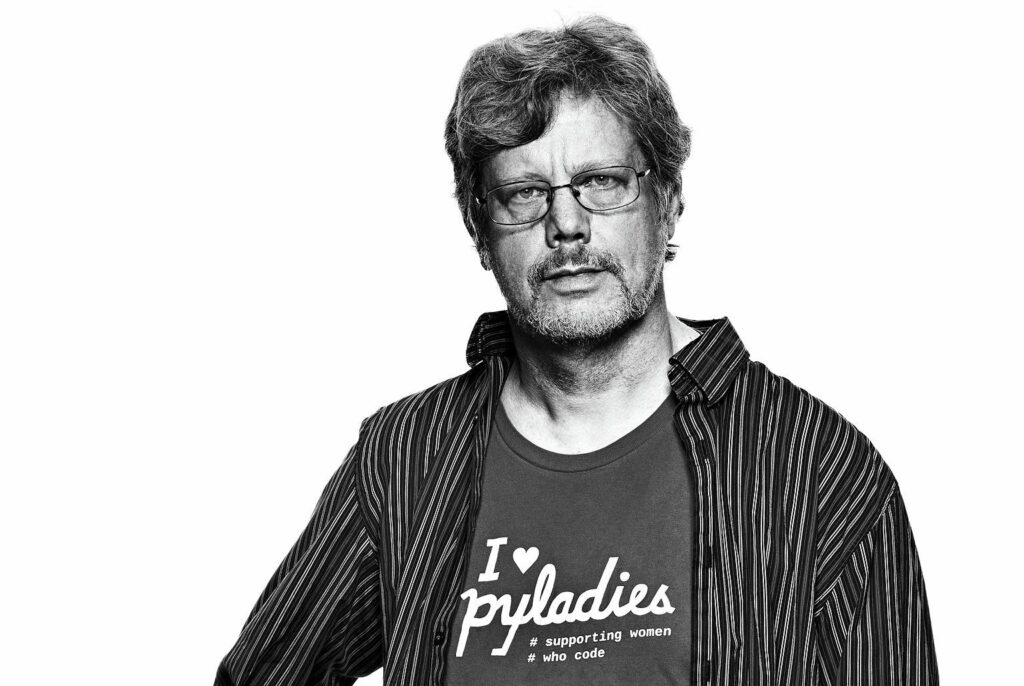
If you’re an experienced programmer, you may have heard of Guido Van Rossum before. He’s the creator of the Python programming language, and he’s also worked as an engineer at Google, Apple, and MercadoLibre. It’s hard to find more experience in software design and implementation than that! What inspired Van Rossum to create Python? What other programming languages does he prefer? And what can we learn from him about the future of software design? These questions and more will be answered in our Life in Code Guido Van Rossum biography.

Guido Van Rossum isn’t your typical computer scientist, but his accomplishments in the field have propelled him to the forefront of programming luminaries and led him to create one of the most widely used languages of all time: Python.

Guido Van Rossum Biography

His contributions to technology have been recognized by several different organizations and publications, including the Association for Computing Machinery, which included him on its list of ACM fellows in 2012, as well as Popular Science magazine, which included him on its list of popular science’s biggest innovators in 2014.

Early Life

In 1977, van Rossum was a student at the University of Amsterdam, where he studied mathematics and physics. He became interested in programming when he wrote a program to help his mother with her bookkeeping and learned about computer programming from an Austrian professor. He taught himself more about programming languages but found that most were too complicated for what he wanted to do.

In 1980, van Rossum read about a new programming language called ABC – designed by Alan Kay – which seemed ideal for teaching children how to program. In 1983, van Rossum started working on an interpreter for the language as part of his thesis project while attending university part-time.

Education

Van Rossum was born and raised by his parents in Netherlands. He got master’s degree in computer science and mathematics in 1982 from Amsterdam University. Later he also received one bronze medal in the year 1974 in International Mathematical Olympiad. Van has a brother, named Just Rossum, who is a programmer and designer known for designing typeface used in “Python Powered” logo. At present, Van lives in California with his wife Kim Knapp & Orlijn their son.

Creating Python

Rossum dreamed of creating his own programming language. Inspired by the ABC language and its ability to handle exceptions without using GOTOs, he decided to develop a new programming language with the help of a Dutch teacher, who had been developing a similar project. Python’s syntax was largely inspired by ABC’s, but it extended some of ABC’s ideas. For example, it used indentation for indicating control flow, rather than keywords or GOTO. It would later become one of the first languages to support lexical scoping, which is vital in maintaining large programs.

It also incorporated many data structures found in other languages such as lists and dictionaries, with the aim of making this common information easy to find.

Rossum has said that these were two key concepts that differentiated Python from other languages at the time. He chose Python because it was short and not trademarked.

Awards

  • Advancement of Free Software Award in 2001
  • Received NLUUG Award in 2003

The post Guido Van Rossum Biography appeared first on The Crazy Programmer.


from The Crazy Programmer https://ift.tt/iqm43z7

Have you ever wondered about the distinctions between web developers’ and web designers’ duties and obligations? You’re not alone!

Many people have trouble distinguishing between these two. Although they collaborate to publish new websites on the internet, web developers and web designers play very different roles.

To put these job possibilities into perspective, consider the construction of a house.

To create a vision for the house, including the visual components, the space planning and layout, the materials, and the overall appearance and sense of the space, you need an architect. That said, to translate an idea into a building, you need construction professionals to take those architectural drawings and put them into practice.

In a similar vein, web development and design work together to create websites. Let’s examine the major responsibilities and distinctions between web developers and web designers.

Let’s get going, shall we?

What Does a Web Designer Do?

The duties of the web designer include creating a vision for the way the website will appear, feel, and work. And that covers a variety of activities, from information architecture and user interface design to user research. Most web designers choose to specialize in various areas of these fields. For instance, some choose to focus on UI (User Interfaces) design, while some on UX (User Experience) design. Additionally, some focus on both.

There exist various kinds of designers, each specializing in a particular and distinctive kind of work. Which are:

  • User Experience (UX)
  • User Interface (UI)
  • Visual

Let’s explore these tasks in more detail so you can choose the website design sections that are ideal for you.

1. UX Web Designers

They work to make sure that the web is set up in a way that captivates users and offers a satisfying user experience. Their responsibility is to create data-driven, human-centric designs. This calls for extensive testing and study to gather and interpret data that will be used to control their design choices.

2. UI designer

A website’s design team should include UI designers as well. They prioritize interactions in addition to the content it offers. More directly, their task is to enhance a website’s usability and use it so that it can help promote conversions.

3. Visual Designers

As their name implies, visible designers deal with a website’s visual components and layout. In this project, features of UI and UX designs are combined. A visual designer’s responsibilities center on making the interface both aesthetically beautiful and simple to use.

What Does a Web Developer Do?

The framework of the website will be built by a web developer using several computer languages, like HTML, CSS, and any programming language like Java, Python, etc and they’ll make sure it’s error-free and performs as intended. A web developer will frequently serve as the designer’s advisor, determining whether the concepts can be technically realized and how challenging or time-consuming the design process will be.

Web developers typically concentrate on a few programming languages. Moreover, the coding they employ will vary depending on the website development work they conduct. Three main categories of web developers exist:

  • Developers of Front-end Websites
  • Developers of Back-end Websites
    Full-Stack Web Developers

1. Developers of Front-end Websites

With the use of CMS (Content Management Systems) like WordPress and other languages, front-end developers create real website code. The majority of front-end development entails programming and coding the user-visible graphic components of a web.

2. Developers of Back-end Websites

Advanced programming languages like PHP, C#Javascript, Ruby, Mysql, and Jquery, and some frameworks, are used by back-end developers to write the database and server.

3. Full-Stack Web Developers

Finally, full-stack web developers write code for a website’s interface and root. Developers are familiar with the operation of the components separately and together.

Web Designer vs Web Developer

Here is a quick explanation of the key distinctions that distinguish these two:

  • Developers concentrate on functionality and structure, while designers concentrate on usability.
  • Web designers envision the idea and appearance and how to make a website. If the idea is both technically and financially feasible, web developers program and construct the website.
  • Web designers need to have a strong foundation in technological expertise. The work is lower for a web designer than mechanical, more concentrated on the aesthetics and originality of the web.
  • Website developers are available in a diverse range of flavors, such as the full stack, the front-end, and the back-end developers. Graphic designers, user experience designers, and UI are the main different types of web designers.

Should You Hire a Web Developer or a Web Designer?

The truth is: it depends. You might want to employ a website designer if you’re a do-it-yourselfer and need help making your website look and feel amazing. On the other hand, if your site’s design is complex and will take a lot of work, you should probably engage a developer to oversee its development.

Both roles are crucial to the growth of a site, and they can each provide your website with a unique edge. To choose the best candidate for your company, think about the goals you have for your website.

Salary

Web designers make a respectable living. The average yearly compensation of a web developer in the United States is roughly $57k, though the pay might vary based on the type of design function, location, and seniority of the position.

Though web developers often make more money than web designers, the remuneration varies depending on their area of expertise. A software engineer in the US typically earns between $65k and $75k annually.

In Summary

Hopefully, this article has helped you understand the main distinctions between a web developer and a web designer. You should try to employ a website designer if you need someone to produce visuals for your website.

As an alternative, you might search for a full-stack developer who is knowledgeable about both front-end and back-end procedures and can create the efficient programs required for a website.

That’s how you choose someone to employ for your project! It’s simple.

The post Difference between Web Designer and Web Developer appeared first on The Crazy Programmer.


from The Crazy Programmer https://ift.tt/PAG89bc

MKRdezign

Contact Form

Name

Email *

Message *

Powered by Blogger.
Javascript DisablePlease Enable Javascript To See All Widget